Breaking Down What Is the TFSA Contribution Limit for 2026 and Why It Matters for Your Portfolio

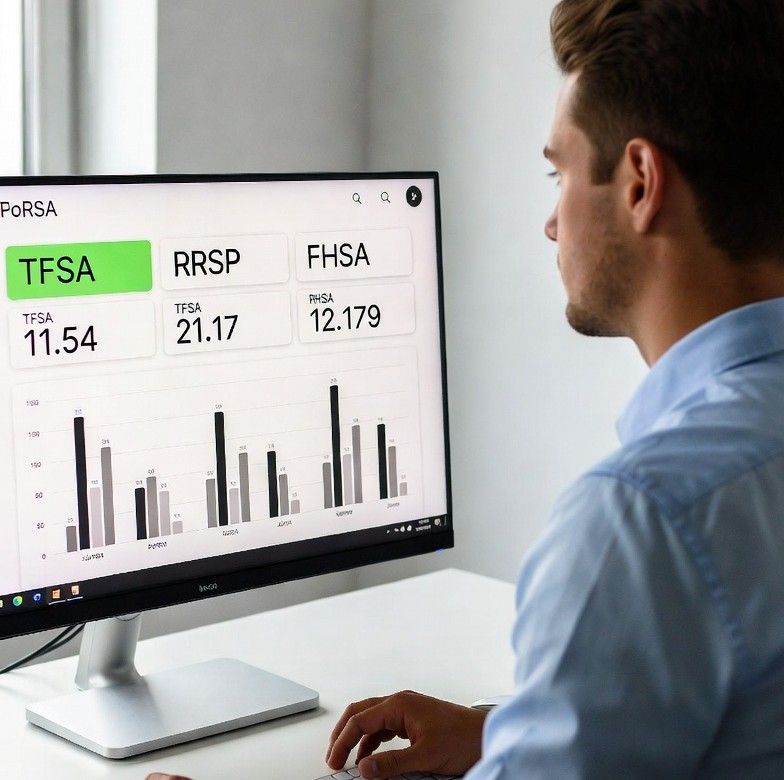
Canadian investor reviewing a portfolio dashboard with TFSA highlighted

The Tax-Free Savings Account contribution limit for 2026 is expected to be $7,000, continuing the indexed adjustment tied to inflation that the Canadian government applies annually. This figure reflects the steady increase in contribution room over time and remains a key benchmark for investors building tax-efficient portfolios.

Understanding what is the TFSA contribution limit for 2026 is essential for anyone looking to maximize tax-free growth. Data from the Canada Revenue Agency shows that annual limits have gradually increased since the TFSA’s introduction in 2009, when the cap was $5,000. These incremental adjustments are designed to keep pace with inflation, preserving the account’s real value over time while encouraging consistent saving behavior.

How Contribution Limits Have Evolved

TFSA limits have followed a clear upward trend, though not always in equal increments. After remaining at $5,000 for several years, the limit rose to $5,500 in 2013 and later reached $6,000 in 2019. It increased again to $6,500 in 2023 and $7,000 in 2024. Finance Canada notes that these adjustments are indexed to inflation and rounded to the nearest $500, which explains the step-like progression rather than smooth annual increases.

This historical pattern highlights an important point. While the annual increase may seem modest, the cumulative contribution room grows significantly over time. Long-term investors who consistently maximize their TFSA can build substantial tax-free portfolios, especially when reinvesting returns.

The Role of Inflation and Policy Trends

Inflation plays a central role in shaping TFSA contribution limits. As the cost of living rises, the government adjusts the cap to maintain purchasing power. Statistics Canada data indicates that inflation has remained elevated in recent years compared to the previous decade, which partly explains the more frequent increases in TFSA limits since 2023.

Policy stability also matters. Unlike other savings vehicles that undergo structural changes, the TFSA has remained relatively consistent in its design. Experts at Fidelity Investments Canada point out that this predictability makes it easier for individuals to plan long-term savings strategies without worrying about sudden rule changes.

Impact on Investment Strategies

Changes in the annual contribution ceiling can influence how investors allocate funds across accounts. When limits increase, investors gain additional room to shelter gains from taxes, which can shift portfolio priorities. Understanding the role of financial analysis in investment decisions becomes essential at this stage, as it helps investors evaluate risks, identify opportunities, and align their strategies with evolving market conditions. Research shows that financial analysis enables more informed decision-making by assessing data, trends, and potential returns across different asset classes.

For example, during periods of market volatility, investors often favor placing higher-growth assets inside a TFSA. Research from Vanguard suggests that equities with strong long-term potential benefit most from tax-free compounding. A higher contribution allowance amplifies this advantage, allowing more capital to grow without tax drag.

At the same time, conservative investors may use the expanded room to hold income-generating assets such as dividend stocks or bonds. While these assets typically produce taxable income outside a TFSA, placing them inside the account can improve overall after-tax returns.

Strategic Considerations for 2026

  • Maximize contributions early in the year to capture more time in the market.
  • Prioritize high-growth investments to leverage tax-free compounding.
  • Review unused contribution room, which can accumulate indefinitely.
  • Balance TFSA use with other accounts such as RRSPs for broader tax planning.

These strategies become especially relevant as contribution limits rise. Even a modest increase can translate into meaningful gains over decades, particularly when combined with disciplined investing.

What the Data Says About Canadian Savers

Canadian saving behavior offers further insight into the importance of TFSA limits. The Canada Revenue Agency reports that millions of Canadians hold TFSAs, yet many do not fully utilize their available contribution room. This gap suggests that awareness and planning remain key challenges.

Meanwhile, a study by BMO Financial Group found that investors who regularly contribute to tax-advantaged accounts tend to achieve better long-term outcomes. Consistency, rather than timing, appears to drive success. Higher contribution thresholds provide more opportunity, but only if individuals take advantage of them.

These findings underscore a broader trend. As financial markets become more complex, tax efficiency has emerged as a critical component of portfolio management. The TFSA, with its flexible withdrawal rules and tax-free growth, continues to play a central role in that strategy.

Adapting Your Portfolio to Annual Changes

Each increase in the TFSA contribution cap presents a chance to refine your investment approach. Rather than viewing it as a simple numeric update, investors can treat it as an opportunity to reassess goals, risk tolerance, and asset allocation.

Financial planners often recommend integrating annual TFSA adjustments into a broader review process. This includes evaluating market conditions, rebalancing portfolios, and ensuring that tax-advantaged accounts are used efficiently. Over time, these incremental decisions can have a significant impact on overall wealth.

Looking ahead, the projected TFSA contribution allowance for 2026 continues the trend of gradual growth. While the increase may appear small in isolation, its long-term implications are substantial. By aligning investment strategies with these annual adjustments, investors can strengthen their portfolios and make the most of Canada’s tax-free savings framework.

Ultimately, understanding annual TFSA limits and their broader context allows for smarter financial decisions. Whether you are a new investor or managing a mature portfolio, staying informed about contribution thresholds, inflation trends, and tax strategies can help you build lasting financial resilience.

Trendspotting: How Tengah Garden Residences Developer, Location, and Market Signals Reflect Broader Property Cycle Movements

Singapore’s property market has long been shaped by cycles of demand, developer strategies, and location-driven value. Each new launch provides signals that investors and homebuyers watch closely. Tengah Garden Residences, a fresh development in the western region, is one such project offering early clues about where the market may be heading.

Interest in the project has been strong, with many observers tracking the Tengah Garden Residences price as a benchmark for how suburban developments might perform in the next cycle. Pricing, combined with developer confidence and location advantages, often sets the tone for broader market sentiment. This makes Tengah Garden Residences more than just another launch, it is a case study in how micro-level signals reflect macro property trends.

Buyers at a property showroom reviewing floor plans and pricing

Developer Confidence as a Market Signal

The developer behind Tengah Garden Residences is City Developments Limited (CDL), a major player in Singapore’s real estate sector. CDL’s decision to invest heavily in Tengah underscores confidence in the long-term growth of the area. Developers typically time launches to align with favorable market conditions, and CDL’s move suggests expectations of sustained demand despite broader economic uncertainties.

Historically, developer actions have foreshadowed market cycles. When established firms commit resources to new projects, it often signals confidence in both pricing resilience and buyer appetite. This is particularly relevant in Singapore, where government cooling measures and interest rate shifts can quickly alter demand patterns.

Location Strengths and Connectivity

Tengah’s positioning as Singapore’s “forest town” adds a unique dimension to its appeal. Planned with sustainability in mind, the area integrates green corridors, smart technology, and eco-friendly infrastructure. Connectivity is another major driver. The upcoming Jurong Region Line will link Tengah to key employment hubs, while expressways provide easy access to the rest of the island.

Location and connectivity often accelerate property trends. Buyers increasingly value convenience and lifestyle integration, and Tengah’s design reflects these priorities. As transport links improve, the area is likely to attract both homeowners seeking long-term value and investors anticipating rental demand.

Early Market Reception and Sales Momentum

Early interest in Tengah Garden Residences has been notable. Analysts point out that strong initial sales often foreshadow broader market performance. When projects achieve high take-up rates, it signals confidence among buyers and investors, reinforcing upward momentum in the property cycle.

Tracking early reception also helps identify shifts in buyer preferences. For instance, demand for larger units or eco-friendly features may indicate evolving priorities in the market. These insights allow investors to anticipate where future demand will concentrate.

Price as a Reflection of Market Sentiment

The Tengah Garden Residences price is more than a figure. It reflects sentiment, affordability, and confidence. Analysts often compare launch prices against surrounding developments to gauge whether buyers are willing to pay a premium for new features or location advantages. If pricing trends upward while maintaining strong demand, it suggests resilience in the property cycle.

Conversely, if buyers resist higher prices, it may indicate caution in the market. Monitoring these dynamics provides valuable foresight into how the broader cycle may evolve, especially in suburban regions where affordability plays a key role.

Analytics and Forecasting

Beyond anecdotal signals, analytics play a growing role in property forecasting. Transaction volumes, price movements, and rental yields all feed into models that predict cycle shifts. Tengah Garden Residences offers a live case study for such analysis. By tracking its performance, analysts can better understand how suburban launches influence overall market direction. For a deeper look at the role of financial analysis in shaping investment decisions, it becomes clear how data-driven insights strengthen forecasting and market confidence.

Data-driven insights are particularly important in Singapore’s tightly regulated market. Cooling measures, loan restrictions, and supply pipelines all interact with buyer behavior. Projects like Tengah provide a lens through which these interactions can be observed in real time.

Conclusion: Reading the Signals

Tengah Garden Residences is more than a new development—it is a signal of where Singapore’s property market may be heading. Developer confidence, location strengths, and early buyer interest all point to resilience in suburban demand. The Tengah Garden Residences price serves as a benchmark for affordability and sentiment, offering clues about the next phase of the property cycle.

For investors and homebuyers alike, tracking these signals is essential. As Singapore’s property market continues to evolve, projects like Tengah provide valuable insights into how cycles shift, where demand concentrates, and how confidence builds. In a market defined by cycles, foresight is everything.

Exploring JobForSA Opportunities to Understand Emerging Finance Trends

Job postings have long been used by economists as early signals of economic change, often revealing shifts months before they appear in official reports. In finance, where skills and regulations evolve fast, hiring patterns can quietly show where the industry is heading.

Carefully watching JobForSA opportunities gives professionals a practical way to read those signals. Each listing reflects what companies need right now, whether that is data analysis, risk management, or compliance expertise. When viewed together, these openings form a snapshot of demand that helps explain how the finance sector is changing.

Job listings as real-time market data

Modern financial professionals analyzing data on laptops

Finance is shaped by regulation, technology, and global events. When any of these forces shift, hiring plans adjust quickly. Job boards capture that movement in real time.

A rise in roles tied to regulatory reporting, for example, often follows new financial rules. Growth in fintech roles may point to wider digital adoption across banks and investment firms. Approaches for analyzing finance data trends can support professionals in interpreting these patterns more clearly and linking hiring signals to broader market developments.

Unlike annual industry surveys, job listings are updated daily. This makes them useful for spotting early patterns. If several employers are suddenly seeking specialists in environmental, social, and governance reporting, it suggests that sustainable finance is moving from theory into daily operations. These signals help professionals understand which skills are becoming essential.

Reading skill gaps and employer priorities

Every job description tells a story. Required qualifications highlight skill gaps that employers are struggling to fill. In finance, these gaps often appear around advanced analytics, cybersecurity awareness, or cross-border compliance knowledge. When the same requirements appear across many listings, they point to industry-wide priorities.

Salary ranges and seniority levels add more context. An increase in well-paid mid-level roles can suggest rapid expansion, while a focus on entry-level hiring may indicate long-term talent building. Observing these details helps job seekers decide whether to upskill, specialize, or broaden their experience.

Using JobForSA as a trend barometer

Platforms that focus on specific regions or sectors offer especially clear insights. JobForSA acts as a barometer for finance trends tied to regional economic activity and employer needs. By scanning postings over time, professionals can see which finance roles are growing faster than others and which ones are fading.

This approach supports smarter career planning. Someone working in traditional accounting might notice increased demand for automation-friendly skills and plan training accordingly. Another professional may spot rising interest in financial technology support roles and explore a lateral move. The value lies in connecting individual listings to the bigger picture.

Anticipating change instead of reacting late

Finance careers often reward those who adapt early. Waiting until a role becomes saturated can limit options. Job market analysis helps professionals move ahead of the curve. It encourages proactive learning and informed decisions, rather than reactive job searching.

Tracking listings also helps employers and educators. Companies can benchmark their hiring needs against competitors, while training providers can adjust programs to meet real demand. This creates a healthier ecosystem where skills align more closely with market needs.

Turning observation into action

Analyzing job trends does not require advanced tools. Setting aside time each month to review listings, note recurring skills, and follow emerging role titles can reveal clear patterns. Over time, these observations build confidence in career decisions.

The finance industry will continue to evolve as technology advances and regulations change. Professionals who treat job listings as a source of insight gain a practical advantage. By paying attention to JobForSA opportunities and what they reveal, it becomes easier to anticipate shifts, prepare for new demands, and build a career that stays relevant in a changing financial landscape.