



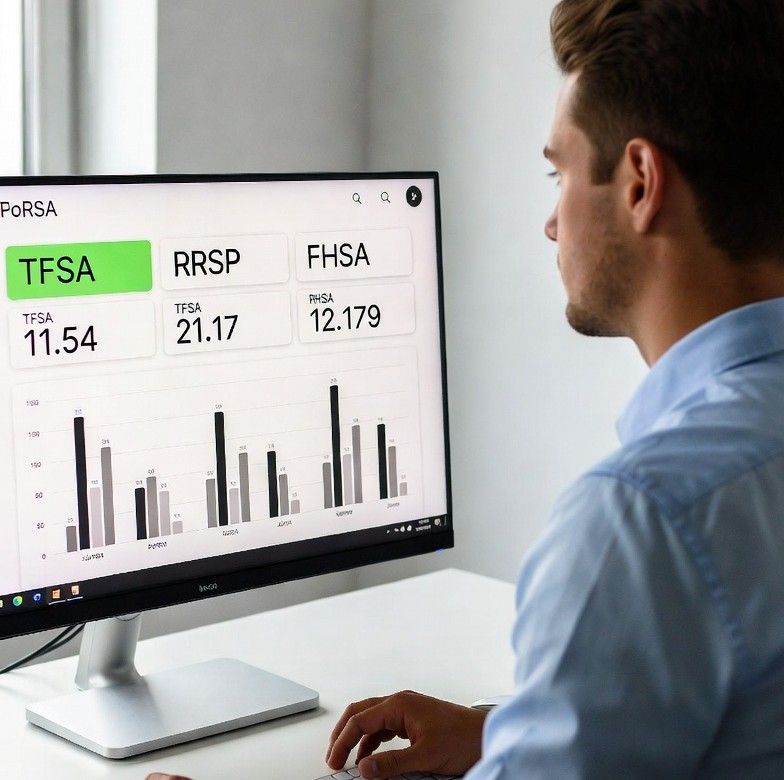
The Tax-Free Savings Account contribution limit for 2026 is expected to be $7,000, continuing the indexed adjustment tied to inflation that the Canadian government applies annually. This figure reflects the steady increase in contribution room over time and remains a key benchmark for investors building tax-efficient portfolios.
Understanding what is the TFSA contribution limit for 2026 is essential for anyone looking to maximize tax-free growth. Data from the Canada Revenue Agency shows that annual limits have gradually increased since the TFSA’s introduction in 2009, when the cap was $5,000. These incremental adjustments are designed to keep pace with inflation, preserving the account’s real value over time while encouraging consistent saving behavior.
How Contribution Limits Have Evolved
TFSA limits have followed a clear upward trend, though not always in equal increments. After remaining at $5,000 for several years, the limit rose to $5,500 in 2013 and later reached $6,000 in 2019. It increased again to $6,500 in 2023 and $7,000 in 2024. Finance Canada notes that these adjustments are indexed to inflation and rounded to the nearest $500, which explains the step-like progression rather than smooth annual increases.
This historical pattern highlights an important point. While the annual increase may seem modest, the cumulative contribution room grows significantly over time. Long-term investors who consistently maximize their TFSA can build substantial tax-free portfolios, especially when reinvesting returns.
The Role of Inflation and Policy Trends
Inflation plays a central role in shaping TFSA contribution limits. As the cost of living rises, the government adjusts the cap to maintain purchasing power. Statistics Canada data indicates that inflation has remained elevated in recent years compared to the previous decade, which partly explains the more frequent increases in TFSA limits since 2023.
Policy stability also matters. Unlike other savings vehicles that undergo structural changes, the TFSA has remained relatively consistent in its design. Experts at Fidelity Investments Canada point out that this predictability makes it easier for individuals to plan long-term savings strategies without worrying about sudden rule changes.
Impact on Investment Strategies
Changes in the annual contribution ceiling can influence how investors allocate funds across accounts. When limits increase, investors gain additional room to shelter gains from taxes, which can shift portfolio priorities. Understanding the role of financial analysis in investment decisions becomes essential at this stage, as it helps investors evaluate risks, identify opportunities, and align their strategies with evolving market conditions. Research shows that financial analysis enables more informed decision-making by assessing data, trends, and potential returns across different asset classes.
For example, during periods of market volatility, investors often favor placing higher-growth assets inside a TFSA. Research from Vanguard suggests that equities with strong long-term potential benefit most from tax-free compounding. A higher contribution allowance amplifies this advantage, allowing more capital to grow without tax drag.
At the same time, conservative investors may use the expanded room to hold income-generating assets such as dividend stocks or bonds. While these assets typically produce taxable income outside a TFSA, placing them inside the account can improve overall after-tax returns.
Strategic Considerations for 2026
- Maximize contributions early in the year to capture more time in the market.
- Prioritize high-growth investments to leverage tax-free compounding.
- Review unused contribution room, which can accumulate indefinitely.
- Balance TFSA use with other accounts such as RRSPs for broader tax planning.
These strategies become especially relevant as contribution limits rise. Even a modest increase can translate into meaningful gains over decades, particularly when combined with disciplined investing.
What the Data Says About Canadian Savers
Canadian saving behavior offers further insight into the importance of TFSA limits. The Canada Revenue Agency reports that millions of Canadians hold TFSAs, yet many do not fully utilize their available contribution room. This gap suggests that awareness and planning remain key challenges.
Meanwhile, a study by BMO Financial Group found that investors who regularly contribute to tax-advantaged accounts tend to achieve better long-term outcomes. Consistency, rather than timing, appears to drive success. Higher contribution thresholds provide more opportunity, but only if individuals take advantage of them.
These findings underscore a broader trend. As financial markets become more complex, tax efficiency has emerged as a critical component of portfolio management. The TFSA, with its flexible withdrawal rules and tax-free growth, continues to play a central role in that strategy.
Adapting Your Portfolio to Annual Changes
Each increase in the TFSA contribution cap presents a chance to refine your investment approach. Rather than viewing it as a simple numeric update, investors can treat it as an opportunity to reassess goals, risk tolerance, and asset allocation.
Financial planners often recommend integrating annual TFSA adjustments into a broader review process. This includes evaluating market conditions, rebalancing portfolios, and ensuring that tax-advantaged accounts are used efficiently. Over time, these incremental decisions can have a significant impact on overall wealth.
Looking ahead, the projected TFSA contribution allowance for 2026 continues the trend of gradual growth. While the increase may appear small in isolation, its long-term implications are substantial. By aligning investment strategies with these annual adjustments, investors can strengthen their portfolios and make the most of Canada’s tax-free savings framework.
Ultimately, understanding annual TFSA limits and their broader context allows for smarter financial decisions. Whether you are a new investor or managing a mature portfolio, staying informed about contribution thresholds, inflation trends, and tax strategies can help you build lasting financial resilience.